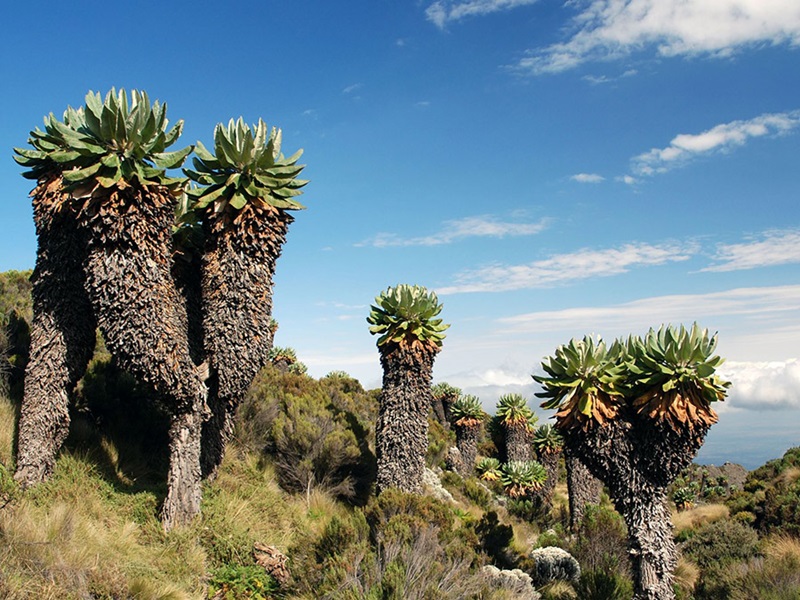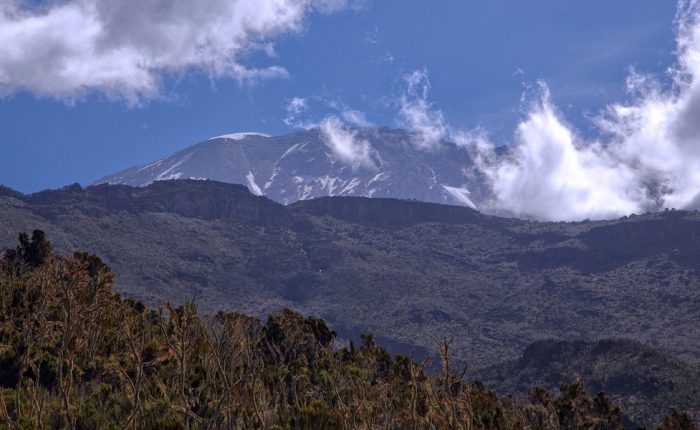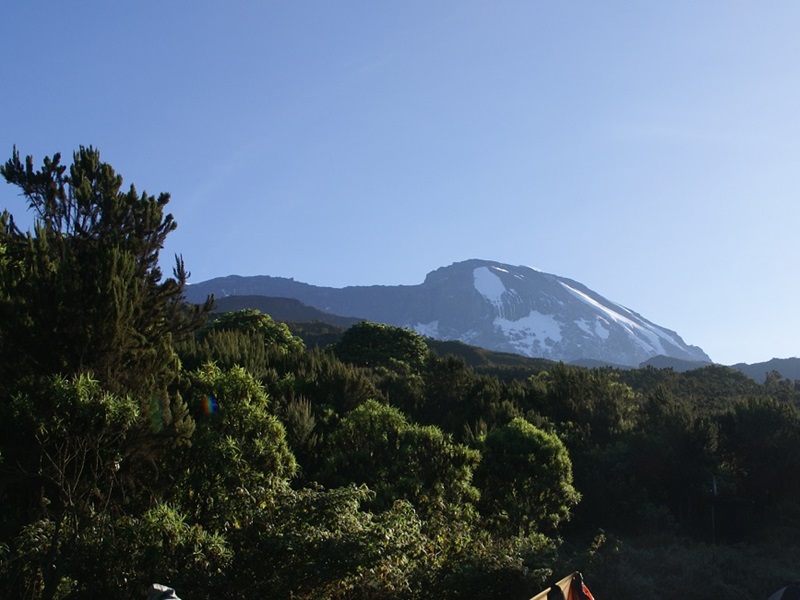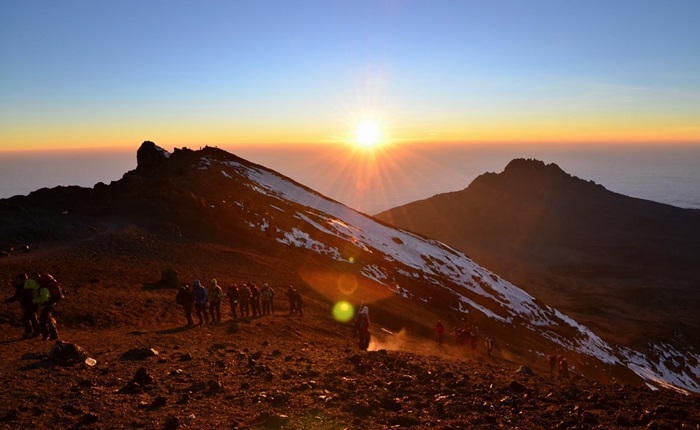
The Rongai Route is the route of Kilimanjaro that begins from the north side, a route where few climbers are seen along the way. This route affords the opportunity to witness up close the Mawenzi Volcano (the second highest peak of Kilimanjaro) and the magnificent saddle between Mawenzi and Kibo Peak. Now you can obtain the permit to the Rongai gate.
The route feels relatively lonely as you cross unspoiled wilderness with little crowds to bother you. Your trek begins near the Kenya border, and you will summit via Marangu route and Gilman point. Descending will take place on the Marangu route. We offer 3 options for the Rongai route covering 5/6/7-day treks, with the 7-day trek being highly recommended for acclimatization.
Habitat: Rain forest
Hiking Time: 3-4hrs
After breakfast at your hotel, you will take a car to drive up to the Marangu gate to collect a permit. Afterwards, its another 2hr drive to the Rongai gate. We register at Nalemuru gate, and then start our climb. Our climb begins in the rainforest of the lower slope where we may encounter animals such as the black and white Colobus monkey, foot prints of buffaloes and elephants, along with several varieties of birds. We then hike to Simba Camp to stay overnight where the porters, camping crew master, and cook/chef are have your dinner preparations ready along with washing water. You will encounter villages that deal and sell maize and potatoes before you enter in the rainforest.
Habitat: Heather & Moorland
Hiking Time 4-5hrs
After getting breakfast, you start climbing slopes flunked with heather, with the twin peaks of Kilimanjaro keeping a watchful eye as you progress. After two hours you will be invited to witness and experience the shadow of the cave. The second caves, around 3450 m, lie twenty minutes further on through lizard country of bare rocks and long grass. After we pass the second caves, we go up hill and cross a wide and usually dry riverbed which in the rainy season is a popular playground for buffaloes. The path continues drifting southwards across the terrain, where the dry flower helichrysum is now interspersed among the heathers. Huge rocks begin appear to the left and right, temporarily obscuring the peaks of Mawenzi and Kibo. We are near the campsite after crossing a final river bed, where you will be met again by the porters and chefs who prepare your accommodations for the evening.
Habitat: Desert Place
Hike Time: 3-4hrs
After having breakfast we start walking through to Alpine desert up to junction for going School Hut. We continue for 45 minutes to reach the Kibo hut 4720m the last camp to go Summit.
Habitat: Desert Place / Summit
Hike Time: 10-15hrs
At around 23:00pm get some tea with biscuit and get ready to start to summit around 23:30 through stone and sand scree up to Williams point and get rest for approximately coming 3 hours to Hans Meyer Caves 4812m. After Hans Meyer Caves the trails are going zigzag or switch packs up to the phase of climbing rocks to the sight post welcoming to Gilman’s point for a 2 and half hours from Hans Meyer.
Roughly time to be in Gilman is around 5:30 am in order to have a chance of seeing the sunrise at Uhuru around 6:30am. This way from Gilman’s to Uhuru Peak is through the junction called Stella Point which is quite easy. After getting at Uhuru peak enjoy stunning of the walls then descend back through to, Stella Point, Gilman’s Point up to Kibo Hut for rest eating lunch and packing for going down to overnight at Horombo Hut. From Kibo to Horombo is about 3hrs down.
Habitat: Moorland & Montana Forest
Hiking Time: 5-6hrs
After breakfast, we descend down to the Marangu Gate where you can have a chance to stop for lunch in the Mandara Hut. Those who reached Stella Point and Uhuru Peak are awarded with Certificates. Then you transfer back to your hotel for a long overdue and hot shower with time to relax.
| 1 Pax | 2 Pax | 3 – 4 Pax | 5 -6 Pax |
|---|---|---|---|
| $ 3,000 | $ 2,800 | $2,750 | $2,700 |